
In today’s fast-paced world, mental health is a growing concern for many individuals. With the constant demands of work, personal life, and the pressures of social media, it’s no surprise that stress, anxiety, and depression have become prevalent in modern society. Fortunately, one practice has been gaining significant attention for its ability to help individuals manage their mental health: mindfulness.
Mindfulness is an easy and effective technique that helps people pay attention to the present moment with awareness, without judgment. Scientific studies have shown that mindfulness practice may have a positive effect on mental health by decreasing stress, anxiety, depression, and even improving emotional regulation. In this article, we will discuss how mindfulness and mental health are related, how mindfulness works, its benefits, and practical ways to introduce mindfulness into your everyday life.
What is Mindfulness?
Mindfulness is the ability to pay attention to the present moment with a gentle, open, and nonjudgmental awareness. It involves being fully engaged in the present while eating, walking, or socializing, rather than being distracted by past regrets or future worries.
The practice of mindfulness originated from ancient Buddhist traditions, but in recent decades, it has been modified and studied in the context of mental health and wellness. The most common form of mindfulness practice is mindfulness meditation, where an individual sits quietly and focuses on their breath, bodily sensations, or thoughts, letting them come and go without attaching judgments or reactions.
The Relationship Between Mindfulness and Mental Health
Mental health refers to emotional, psychological, and social well-being, which affects how individuals think, feel, and act. Research has demonstrated that mindfulness positively impacts all aspects of mental health, providing both preventative and therapeutic benefits. Below are some of the significant ways mindfulness can improve mental health:
1. Reducing Stress
Stress is a normal reaction to challenging situations, but when experienced consistently, it can have detrimental effects on both the body and mind. Chronic stress has been linked to a range of mental health problems, including anxiety, depression, and burnout.
Mindfulness reduces stress by helping individuals focus on the present instead of dwelling on the past or future. Research has shown that mindfulness practices activate the parasympathetic nervous system, which triggers the body’s relaxation response. This lowers heart rate, blood pressure, and cortisol levels, reducing the overall perception of stress.
2. Reducing Anxiety
Anxiety is one of the most common mental health challenges today, affecting millions of people worldwide. It often involves excessive worry about future events and fear of the worst outcome. Mindfulness can help break this cycle by teaching individuals how to observe their anxious thoughts without becoming overwhelmed by them. Instead of reacting to anxiety with avoidance or fear, mindfulness encourages individuals to acknowledge their emotions and thoughts without judgment.
Scientific findings show that Mindfulness-Based Interventions (MBIs) are highly effective in relieving anxiety symptoms. Mindful breathing and focusing on the present moment, through activities such as the body scan, help people develop space for their thoughts and emotional reactions, thereby decreasing the power of anxious feelings.
3. Relieving Depression
People with depression often feel detached from the world, lack motivation, and experience negative thinking patterns. Fortunately, mindfulness has been observed to help alleviate these symptoms. Mindfulness teaches individuals not to judge their thoughts and feelings, promoting a heightened awareness of the negative thinking patterns that may contribute to depression.
One of the most widely studied approaches combining mindfulness and cognitive therapy for depression is Mindfulness-Based Cognitive Therapy (MBCT). By focusing on the present, individuals can break the cycle of rumination and gain more control over their thoughts and emotions, leading to better emotional regulation and reduced depressive symptoms.
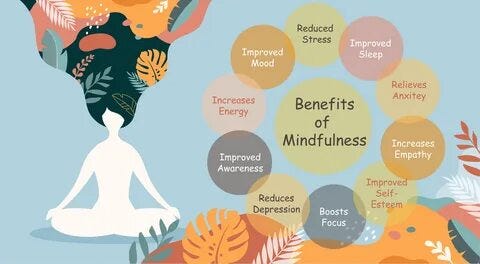
4. Improving Emotional Regulation
Emotional regulation is the ability to manage and respond to emotional experiences in a healthy manner. When emotional regulation is lacking, individuals may overreact, struggle to control their impulses, or experience extreme mood swings. Mindfulness improves emotional regulation by helping individuals become more aware of their emotional responses, allowing them to process emotions thoughtfully and with balance.
Mindfulness practices have been shown to increase activity in brain regions associated with emotional control, such as the prefrontal cortex. As individuals become more attuned to their feelings, they can recognize when they are becoming overwhelmed and use techniques like deep breathing or grounding to regain control.
5. Improved Self-Awareness
Self-awareness is a critical aspect of mental well-being. It involves recognizing and understanding your thoughts, emotions, and behaviors. Without self-awareness, it can be difficult to identify the root causes of your distress or make meaningful changes in your life.
Mindfulness fosters self-awareness by encouraging individuals to notice their internal experiences without judgment. This heightened awareness allows individuals to identify patterns in their thoughts and behaviors, helping them make conscious decisions rather than acting on autopilot. With improved self-awareness, individuals gain greater clarity and make choices that support their mental and emotional health.
6. Enhancing Relationships
Mindfulness has a positive impact not only on an individual’s mental health but also on interpersonal relationships. By practicing mindfulness, individuals become more present and engaged during their interactions with others, leading to better communication and a deeper understanding of others’ emotions and perspectives.
Additionally, mindfulness can help individuals become less reactive in difficult situations, allowing them to respond to conflict with patience and compassion. In relationships, mindfulness fosters a sense of connection, trust, and emotional intimacy.
How to Integrate Mindfulness into Your Daily Life
Incorporating mindfulness into your daily routine doesn’t have to be time-consuming or complicated. Here are some simple practices you can try:
1. Mindful Breathing
Spend a few minutes each day focusing on your breath. Close your eyes, breathe in deeply through your nose, and slowly exhale through your mouth. Pay attention to how the air feels as it enters and leaves your body. This can help calm your mind and reduce stress.
2. Mindful Eating
Instead of rushing through meals, take time to eat mindfully. Focus on the taste, texture, and smell of your food. Pay attention to how your body feels — either satisfied or overly full — and let your body guide you in knowing when to stop eating.
3. Body Scan
Lie down in a comfortable position and relax. Close your eyes and take an imaginary tour of your body, starting from your head and moving down to your toes. Notice any areas of tension or discomfort and allow yourself to release that tension as you go along.
4. Mindful Walking
Take a walk outside and focus on each step you take. Pay attention to the sensation of your feet making contact with the ground, the sounds around you, and the rhythm of your breath. This practice can help you reconnect with your surroundings and reduce stress.
5. Mindfulness Meditation
Set aside 10–15 minutes each day for mindfulness meditation. Sit in a relaxed position, focus on your breath, and gently guide your attention back to the present moment whenever your mind starts to wander. Over time, this practice will help improve your focus, emotional regulation, and mental clarity.

Conclusion
Mindfulness is an essential tool for enhancing mental health. It offers a powerful method for managing stress, anxiety, depression, and emotional regulation. By integrating mindfulness practices such as mindfulness meditation, mindful eating, and simple breathing exercises into your daily routine, you can improve your mental health, increase self-awareness, and develop greater emotional resilience. Remember, even small moments of mindfulness can make a significant difference. Take it one step at a time, be patient with yourself, and embrace each moment as an opportunity to practice mindfulness for a more balanced and fulfilling life.


0 Comments